



Capabilities, organized in three structural layers

Four technical divisions, one discipline. Foundations covers what you build on, Governance covers how the stack is directed, and Operations covers how it is run every day.

Capabilities

  1. Foundations

    Enterprise Cloud Computing Infrastructure

    Ensures uninterrupted business continuity and rapid resource scaling under variable operational demands.

    Read more
  2. Foundations

    Network System Deployment

    Minimizes latency and fortifies internal and external data transmission pathways.

    Read more
  3. Governance

    IT Architecture Management

    Optimizes long-term technology investments and aligns infrastructure with evolving business objectives.

    Read more
  4. Operations

    Corporate IT Operations

    Reduces system downtime and frees internal teams to focus on core strategic business initiatives.

    Read more
Engineer in a high-visibility vest patching cables into an open server rack inside a large data hall
Two technicians kneeling at an open rack, sorting cables and checking a printed plan
Structured cabling to plan
Network technician routing bundled patch cables through rack-mounted switches
Network deployment
Operations technician checking monitoring graphs on a tablet beside a server rack
Operations oversight

By layer

What each layer covers

Each capability can be engaged on its own. Where a project crosses layers, for example a migration that needs new network routes and an operations handover, the work is planned as one structured programme.

Build: Foundations

The physical and virtual base every system stands on: cloud platforms sized for real workloads and the networks that connect them.

Enterprise Cloud Computing Infrastructure

Building resilient, scalable, and high-performance cloud architectures tailored for heavy enterprise workloads.

Suited to: Organizations with heavy or growing workloads that need continuity during peaks and changes.

Typical scope
  • Workload assessment
  • Resilient architecture
  • Scaling model
  • Migration planning
Details

Network System Deployment

Architecting robust enterprise networking frameworks with rigorous routing, security controls, and high throughput.

Suited to: Businesses connecting several offices, data rooms or cloud regions under one network model.
Typical scope
  • Network design
  • Segmentation
  • Security controls
  • Site interconnection
Details

Govern: Governance

The structure above the hardware: standards, roadmaps and decisions that keep a growing technology stack coherent.

IT Architecture Management

Systematic design and ongoing governance of complex enterprise technology stacks to eliminate operational friction.

Suited to: Enterprises whose technology stack has grown in layers and now creates friction or duplicated cost.

Typical scope
  • Current-state mapping
  • Target architecture
  • Standards and principles
  • Roadmap governance
Details

Run: Operations

The daily discipline that keeps an environment healthy once it is live, monitored and maintained before problems surface.

Corporate IT Operations

Comprehensive oversight of day-to-day technical environments, performance monitoring, and proactive maintenance.

Suited to: Teams that want dependable day-to-day operations so internal staff can focus on strategic work.

Typical scope
  • Environment oversight
  • Performance monitoring
  • Proactive maintenance
  • Incident handling
Details

Choosing where to start

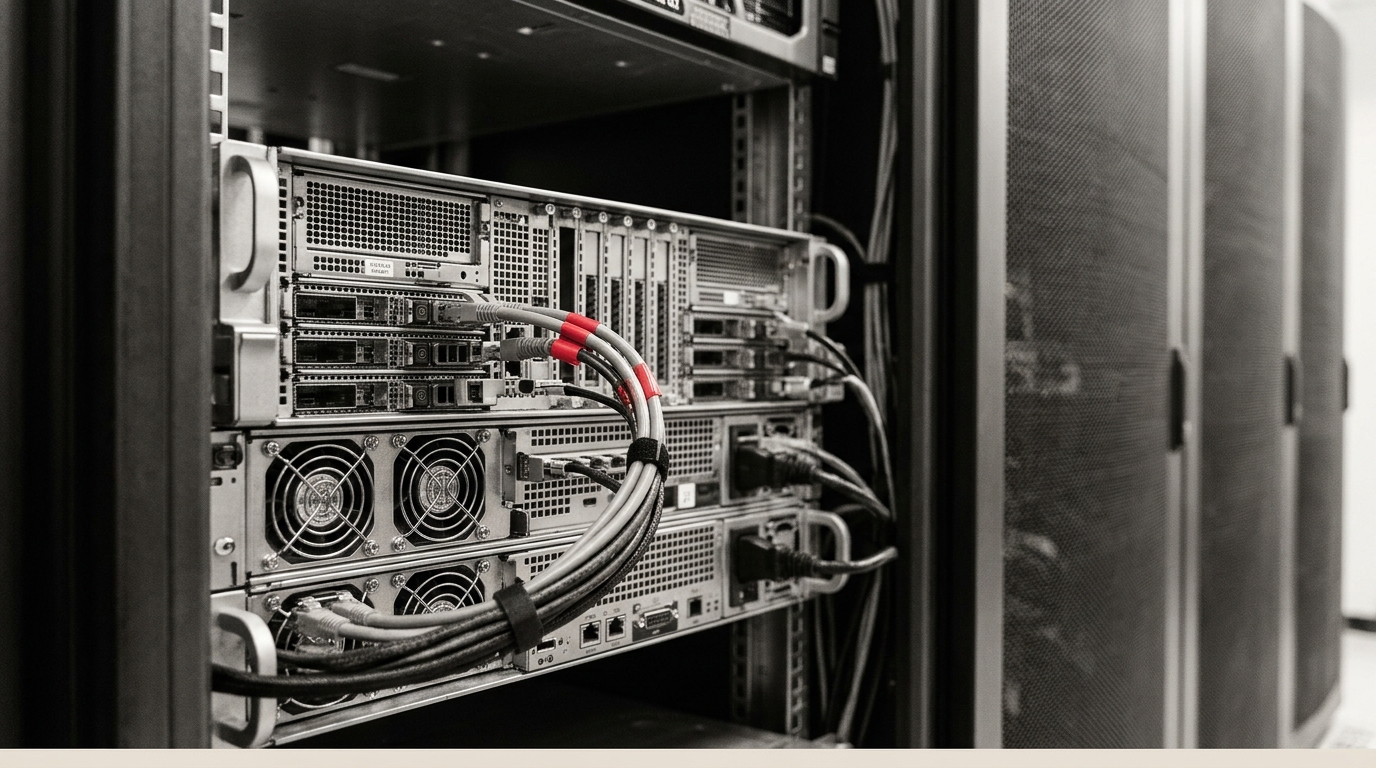
Close view of rack-mounted servers with bundled network cables marked by red bands

Building something new

New platforms, new sites or a planned move to the cloud usually begin in the Foundations layer, with architecture review alongside, so the base is settled before workloads arrive.

Stabilizing what exists

Established environments with recurring incidents or rising cost often start with Governance and an Operations baseline, then move to targeted improvements.

Email an enquiry